 Listicle
Signs Your Mechanic Uses Cheap Parts
Table of Contents
- Why Cheap Parts End Up in Your Vehicle
- OEM vs Aftermarket Parts Quality: What Your Mechanic Should Be Using
- Physical Signs That Cheap Parts Were Installed
- Mechanic Repair Invoice Red Flags to Watch For
- Questions to Ask Your Mechanic Before Repairs
- How to Verify Part Authenticity and Quality
- Using manufacturer part numbers for verification
- Cross-referencing part numbers across suppliers
- Inspecting packaging and labeling for counterfeits
- Physical inspection of the part itself
- Using manufacturer authentication codes and holograms
- Requesting the supplier invoice
- Post-repair verification checklist
- The Real Cost of Cheap Parts on Vehicle Safety
- Frequently Asked Questions
Last Updated: September 28, 2026
Why Cheap Parts End Up in Your Vehicle
Your mechanic's choice to install cheap parts usually comes down to margin. A shop that buys low-quality aftermarket components at wholesale prices can mark them up significantly and pocket the difference. You never see the supplier invoice, so you don't know what they actually paid.
Cheap parts fail faster, perform worse, and can compromise your vehicle's safety. At Platinum Auto Works, we use only vehicle-specific, new aftermarket parts because we've seen firsthand what happens when you don't.
The signs your mechanic uses cheap parts emerge over weeks or months as components degrade or fail prematurely. Learning to spot these warnings before they become expensive failures is essential.
OEM vs Aftermarket Parts Quality: What Your Mechanic Should Be Using
Original Equipment Manufacturer (OEM) parts come directly from your vehicle's maker. Aftermarket parts are made by third-party suppliers. Quality varies significantly between them.
High-quality aftermarket parts often match or exceed OEM performance and cost less because suppliers don't carry vehicle manufacturer overhead.
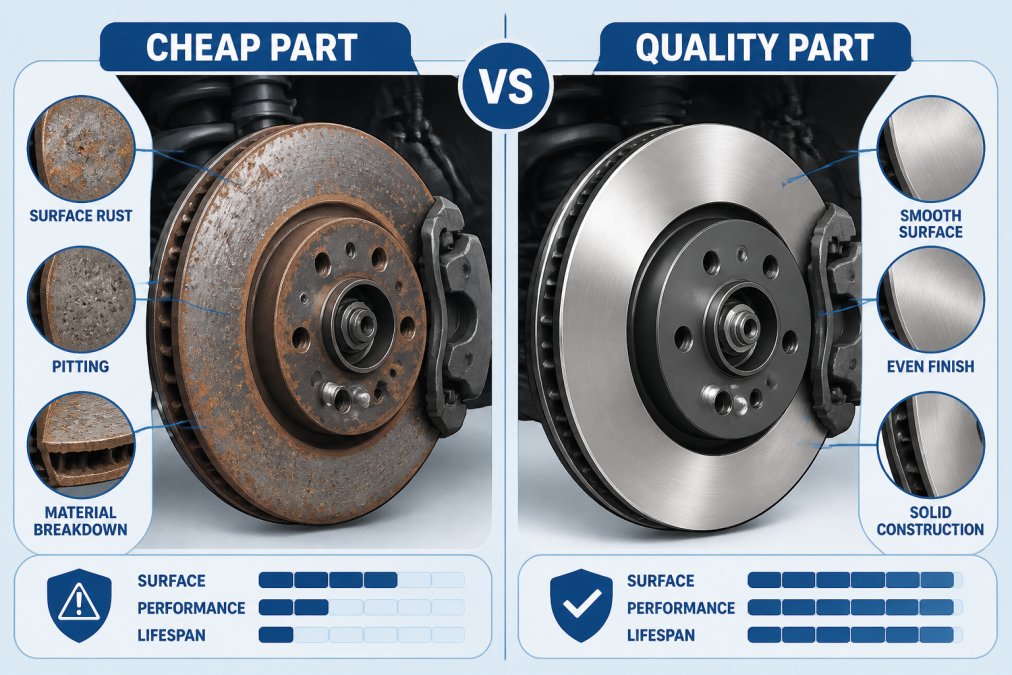
Cheap aftermarket parts cut corners on material quality and testing. A budget brake rotor might have internal porosity that weakens its structure; budget brake pads use cheaper friction materials that wear faster.
Your mechanic should specify parts by manufacturer and part number, not by price tier. Vague language like "quality aftermarket parts" without a brand name is a red flag.
Physical Signs That Cheap Parts Were Installed
This is where you can actually see the problem. If you know what to look for, cheap parts leave evidence.
Poor fitment and gaps
Quality parts fit precisely. Cheap parts often don't. Look for visible gaps between panels or forced connections after a repair.
Poor fitment allows dirt and moisture to reach components and creates stress points that fail prematurely.
Visible corrosion and material breakdown
Quality rotors have smooth, even surfaces with consistent color. Budget rotors show surface rust or pitting within weeks due to poor casting quality. Budget brake pads break down unevenly and leave deposits on rotors.
Rust forming within a month or two of installation on suspension components or fasteners suggests poor material quality.
Premature failure and noise
The clearest sign is when parts fail or make noise long before they should.
Cheap brake pads wear unevenly and generate excessive noise within weeks. Cheap serpentine belts crack and fray prematurely. Budget suspension components bind or clunk due to loose tolerances or material degradation.
Premature noise indicates material breakdown faster than normal.
If your vehicle sounds different after a repair, schedule a follow-up inspection. A reputable shop will investigate; a shop with cheap parts will dismiss your concerns.
Mechanic Repair Invoice Red Flags to Watch For
A legitimate invoice is transparent; a deceptive one is deliberately vague.
What a legitimate invoice must include
A professional shop's invoice should contain these specific elements:
Part identification: The exact manufacturer name and part number for every component. Generic descriptions like "brake pads (set)" indicate intentional obscurity.
Parts cost and labor cost separated: These should be on separate lines. Lumped charges prevent verification of part pricing.
Warranty information: The warranty period, coverage terms, and provider (manufacturer or shop).
Red flags in parts markup and pricing
Most shops mark up parts 30-50% over wholesale cost. Some shops use cheap parts and inflate markup to 100-200%, hiding low quality behind high pricing.
Extremely low labor rates with high parts costs: Labor at $50/hour with 150% parts markup indicates margin is entirely on cheap parts. Balanced invoices show labor at $75-$150/hour and parts markup at 30-50%.
Parts costs that seem disproportionate: A serpentine belt should cost $40-$80 installed. If your invoice shows $150, ask your mechanic to justify the cost.
No itemization of parts: If the invoice lacks breakdown of replaced components, you can't verify pricing.
Vague brand names or "house brands": Some shops use generic names like "Premium alternator" instead of "Bosch alternator" to obscure the manufacturer. Always ask for the actual manufacturer name.
Understanding warranty language
Manufacturer warranty vs. shop warranty: Quality parts come with manufacturer warranties (12 months or 12,000 miles). "Shop warranty only" means no manufacturer backing, the parts are cheap.
Limited vs. full warranty: Full warranties cover defects and failure. Limited warranties exclude common failure modes like bearing or regulator failure.
Warranty exclusions: Cheap parts exclude "normal wear," vague enough to deny most claims. Quality parts have clear, broad coverage.
Comparing invoices across shops
Same part number, different prices: The cheaper shop might be using a counterfeit or refurbished part. Ask: "Is this part new or refurbished?"
Different part numbers for the same repair: Ask why shops chose different manufacturers. A good mechanic explains the trade-off; a cheap shop picks whatever's cheapest.
Labor rates that are suspiciously low: Combined with vague invoicing, this is a red flag.
What to do if the invoice is unclear
Ask for clarification before paying: If your mechanic gets defensive or refuses to provide manufacturer name and part number, walk away.
Request a copy of the supplier invoice: A transparent shop will show the part number, manufacturer, and purchase date, proving they actually purchased the part.
Get a written warranty: Warranty terms must be printed on the invoice or warranty card. Verbal promises don't count.
Questions to Ask Your Mechanic Before Repairs
"What specific part brand and part number are you installing?" A real mechanic answers immediately and explains their choice. Defensiveness or vagueness is your answer.
"What's the warranty on these parts?" A shop should specify the coverage period and what's included.
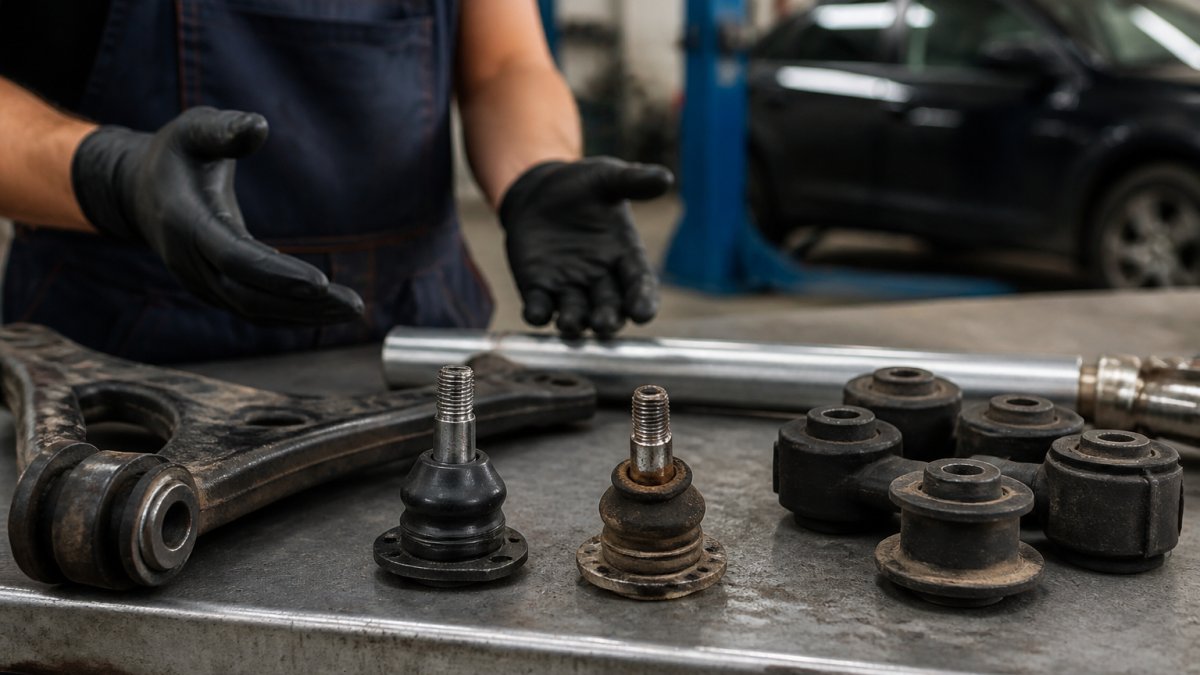
"Can I see the old part after removal?" A mechanic should save the failed component so you can inspect material breakdown and wear patterns.
"Is this OEM or aftermarket, and why did you choose it?" A good mechanic recommends the best option for your vehicle, not the cheapest.
"Do you have references or documentation of similar repairs on my vehicle's model?" A shop that specializes in your vehicle type knows which parts work best.
How to Verify Part Authenticity and Quality
You can verify part authenticity before installation using several methods.
Using manufacturer part numbers for verification
Every legitimate part has a manufacturer's part number (MPN). Before installation, ask for the part number and verify it on the manufacturer's official website.
If the part number doesn't appear in the manufacturer's lookup system for your vehicle, it's either wrong or counterfeit.
Verify major components like alternators, starters, water pumps, brake rotors, and suspension parts. If a manufacturer won't let you verify a part number online, that's a red flag.
Cross-referencing part numbers across suppliers
A single part often has multiple part numbers depending on the supplier.
Use cross-reference tools like RockAuto or manufacturer compatibility charts. Enter your VIN to see every valid part number for that component.
Inspecting packaging and labeling for counterfeits
Quality parts come in professional packaging with clear branding and manufacturing dates. Counterfeit parts show poor quality control.
Physical inspection of the part itself
Quality components have consistent finish, smooth surfaces, and proper weight. Cheap parts show manufacturing defects immediately.
Using manufacturer authentication codes and holograms
Many manufacturers include QR codes, holograms, or scratch-off codes that verify authenticity when scanned.
Requesting the supplier invoice
A transparent mechanic will show their supplier invoice, revealing whether they're marking up a cheap component with inflated pricing.
Post-repair verification checklist
Ask for all removed parts. Compare the old part to the new one. Does the new part look significantly cheaper?
-
Request a detailed invoice. The invoice should list the exact part number, manufacturer name, quantity, and parts cost separately from labor. If it says only "brake pads" or "alternator" without a brand or part number, ask for clarification.
-
Verify the part number on the installed component. Once the part is installed, look at it directly (if accessible) and confirm the part number matches what's on your invoice. For example, on a new alternator, you should be able to see the part number stamped or printed on the housing.
-
Get warranty documentation. Quality parts come with manufacturer warranties. Ask your mechanic for the warranty card or documentation. This should include the warranty period (typically 12 months or 12,000 miles for aftermarket parts) and what's covered. If no warranty documentation exists, the part is likely cheap or counterfeit.
The Real Cost of Cheap Parts on Vehicle Safety
This is the part most people don't think about until it's too late.
Frequently Asked Questions
How can I tell if my mechanic used aftermarket parts instead of OEM?
Request the original parts box and packaging after the repair is complete. Legitimate aftermarket parts come with manufacturer packaging, part numbers, and warranty documentation. OEM parts will have the vehicle manufacturer's branding. Ask your mechanic in writing which type they're installing before work begins. If they resist providing documentation or the parts box, that's a red flag that cheap or counterfeit components may have been used.
What are the signs of low-quality repair work related to cheap parts?
Look for poor fitment with visible gaps, uneven installation, or parts that don't align properly with surrounding components. Corrosion appearing quickly after repair, unusual noises, or premature failure within weeks are strong indicators. Check your invoice for vague part descriptions, missing part numbers, or suspiciously low labor rates. Quality repairs using proper parts should come with clear documentation and a warranty that covers both parts and workmanship.
What questions should I ask my mechanic before they begin repairs?
Ask specifically whether they'll use OEM or new aftermarket parts, and request the part numbers in advance. Request a written estimate that lists each component with its manufacturer and part number. Ask about warranty coverage on both parts and labor, and whether you can inspect the old parts and new ones before and after installation. Request they provide the original parts box and documentation. These questions establish accountability and protect you from cheap parts being substituted without your knowledge.
Why do some mechanics use cheap parts when quality alternatives are available?
Cheap parts offer higher profit margins for shops that source them at discount rates. Some mechanics prioritize short-term revenue over customer trust and vehicle longevity. Others may not have access to quality suppliers or lack training on proper diagnostic methods, leading them to use the 'parts cannon' approach of replacing components without confirming they're actually faulty. Transparent shops build their reputation on using vehicle-specific, quality aftermarket parts and stand behind their work with warranties.