 Ultimate guide
Why Exotic Car Repairs Cost More: A Complete Guide
Table of Contents
- Why Exotic Car Repairs Cost More: The Core Factors
- Specialized Automotive Labor Rates and Technician Expertise
- Proprietary Diagnostic Equipment and Specialized Tools
- Aftermarket vs OEM Parts for Exotic Cars
- Exotic Car Maintenance Schedule and Preventative Care
- Supply Chain Logistics and Parts Availability
- Long-Term Ownership Cost Implications
- Frequently Asked Questions
Last Updated: September 25, 2026
Why Exotic Car Repairs Cost More: The Core Factors
Exotic car repairs cost substantially more than standard vehicle maintenance for reasons that go far beyond simple labor rates. The complexity starts with the vehicles themselves: they're engineered to perform at levels that demand precision, specialized knowledge, and tools that don't exist in typical repair shops. At Platinum Auto Works, LLC, we serve owners of exotic imports, and the cost structure reflects the reality of what these vehicles actually require.
When you own an exotic car, you're not just paying for someone to turn a wrench. You're paying for access to proprietary diagnostic software that costs thousands of dollars, technicians who've spent years mastering specific makes and models, and components engineered to tolerances that demand exactness. A single misalignment or improper service interval can trigger cascading failures that cost exponentially more to fix later.
The financial reality of exotic car ownership means understanding why exotic car repairs cost more upfront saves money over the long term. Prevention through proper maintenance schedules prevents emergency repairs that can reach five or six figures. This guide breaks down the actual cost drivers so you can make informed decisions about your vehicle's care.
Specialized Automotive Labor Rates and Technician Expertise
Certified technicians who work on exotic vehicles command higher hourly rates because their expertise carries genuine scarcity value. A technician trained on Ferrari diagnostics, for example, spent years developing skills that apply to a relatively small pool of vehicles. This specialization isn't optional, it's essential because working on these cars requires understanding engineering decisions that differ fundamentally from mass-market vehicles.
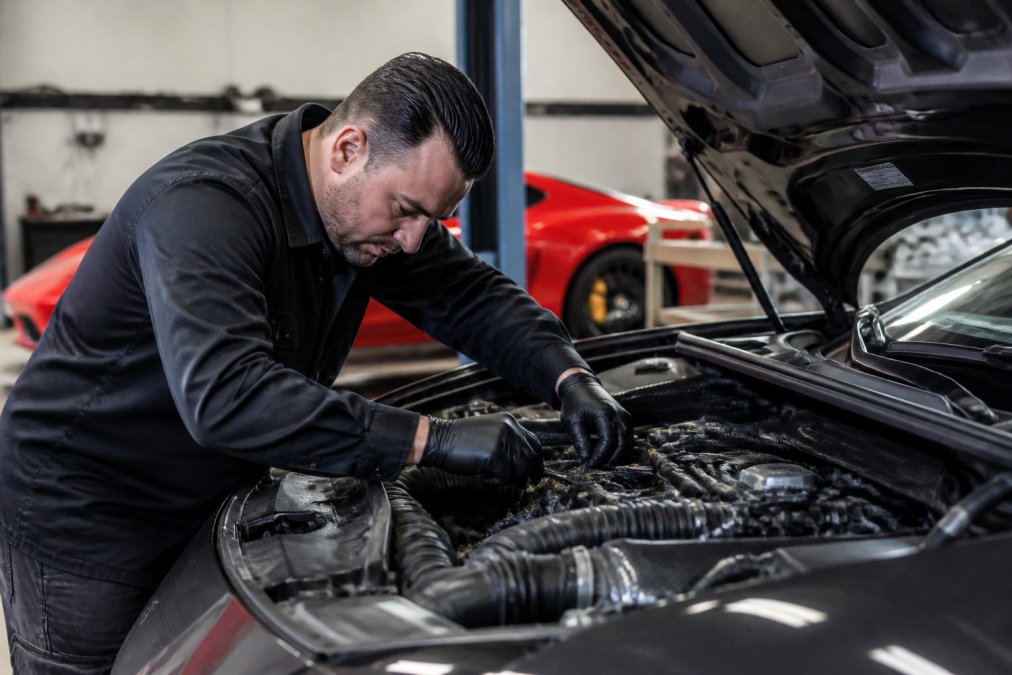
The difference between a general mechanic and a specialized automotive labor professional shows up in diagnostic speed and accuracy. A technician familiar with your specific exotic model can identify problems in minutes that might take hours of trial-and-error elsewhere. That efficiency, combined with the liability risk of working on high-value vehicles, justifies the premium labor rates. Most exotic vehicle owners find that paying for expertise prevents far costlier mistakes.
Platinum Auto Works, LLC offers unparalleled automotive repair and high-end customization, serving owners of everything from daily drivers to exotic imports with over two decades of specialized experience. The precision required for these vehicles means we invest continuously in training, certification, and staying current with manufacturer updates. That investment gets passed to clients through reliable diagnostics and repairs that hold up long-term.
Proprietary Diagnostic Equipment and Specialized Tools
Exotic vehicles use proprietary diagnostic software that manufacturers license only to authorized dealers or certified shops. A single diagnostic scan on an exotic car can cost hundreds of dollars because the equipment required to read the vehicle's computer systems isn't available at chain repair shops. This software does more than read error codes, it communicates with multiple integrated systems and requires interpretation by technicians trained in that specific manufacturer's logic.
Beyond software, the specialized tools themselves represent significant capital investment. Precision measuring equipment, specialized torque wrenches calibrated to exotic specifications, and manufacturer-specific service tools often cannot be substituted with standard equipment. Using the wrong tool, even if it seems functionally similar, can damage components and void warranties. The cost of maintaining this equipment inventory factors directly into service charges.
A common mistake is assuming that diagnostic equipment is interchangeable across brands. It isn't. Ferrari's diagnostic system doesn't translate to Lamborghini, which doesn't translate to Porsche. Each manufacturer designs proprietary systems, which means shops serving exotic vehicles must invest in multiple platforms. That capital expense, spread across a smaller client base than a general repair shop, increases per-service costs.
Aftermarket vs OEM Parts for Exotic Cars
The choice between aftermarket vs OEM parts for exotic cars represents a critical decision point that directly impacts both cost and reliability. OEM (Original Equipment Manufacturer) parts carry manufacturer engineering specifications and quality guarantees, but they cost significantly more than aftermarket alternatives. For exotic vehicles, the premium often reflects engineering precision that aftermarket suppliers simply cannot replicate.
Aftermarket parts for exotic cars exist in a narrower market than parts for common vehicles. Suppliers produce fewer units, which means unit costs stay higher. More importantly, not all aftermarket parts meet the precision tolerances required by exotic engineering. A brake pad for a Ferrari must handle thermal loads and braking forces that differ from standard vehicles. Using substandard components creates safety risks and potential cascade failures.
Platinum Auto Works, LLC utilizes only vehicle-specific, new aftermarket parts for reliable results, avoiding the false economy of cheap substitutes. The difference between a properly-engineered aftermarket component and a generic alternative can determine whether your repair lasts 20,000 miles or 200,000 miles.
Exotic Car Maintenance Schedule and Preventative Care
A proper exotic car maintenance schedule prevents the expensive emergency repairs that define exotic ownership gone wrong. Preventative maintenance means following service intervals designed specifically for your vehicle's engineering, not the generic intervals that apply to standard cars. Missing a single service interval on an exotic vehicle can create conditions for failures that cost tens of thousands to repair.
The complexity of modern exotic engineering means that preventative maintenance catches problems before they cascade. A fluid analysis during routine service might reveal early wear patterns in the drivetrain. Replacing components proactively costs a fraction of what happens when those components fail completely. This is where proper maintenance schedule adherence delivers its greatest value.
Most exotic vehicle owners who manage long-term costs understand that skipping or delaying maintenance creates false savings. The cost of ownership increases dramatically when reactive repairs replace preventative care. Working with technicians who understand your specific vehicle's maintenance requirements, not generic guidance, protects your investment.
Supply Chain Logistics and Parts Availability
Supply chain logistics for exotic vehicles operates on a fundamentally different model than standard automotive parts distribution, creating both direct and hidden costs that vary dramatically by geography. Exotic manufacturers produce vehicles in low volumes, Ferrari produces roughly 10,000 vehicles annually across all models, which means parts availability depends on specialized logistics networks rather than regional warehouses. A common component for a Ferrari might require ordering directly from Italy, with lead times measured in weeks rather than days. That delay, combined with international shipping costs for specialized components, increases overall repair expenses significantly.
Low-volume production means manufacturers don't maintain massive parts inventories like mass-market producers do. Each component must be ordered through specific channels, often requiring advance planning and manufacturer authorization. A shop that hasn't anticipated parts needs can face delays measured in 4-8 weeks for some components, during which the vehicle sits in the shop. For owners paying storage fees or losing use of a vehicle during an extended repair window, this logistics delay creates secondary costs that dwarf the parts cost itself.
The geographic cost multiplier emerges when owners live in regions without specialized exotic shops. An owner in a secondary market, anywhere outside major metropolitan areas with certified exotic service centers, faces a critical choice: attempt local repair through a general shop (risking improper service) or transport the vehicle to a specialized hub. Transporting an exotic vehicle typically costs $2,000-$5,000 depending on distance, requires enclosed trailer service to prevent damage, and adds 2-5 days to the repair timeline. For a transmission service that might take 8 hours at a specialized facility, the total cost including transport can reach $8,000-$12,000 versus $4,000-$6,000 if the owner lived near a certified shop.
Parts sourcing complexity for exotic vehicles means that shops serving these cars must maintain strong relationships with manufacturers and authorized distributors, relationships that carry real costs. Certified shops often pre-order common wear items and maintain component inventory specifically to avoid delays. That inventory carrying cost gets reflected in service pricing. Additionally, the risk of ordering incorrect components, a real possibility with exotic vehicles where small variations in part numbers indicate different specifications, means technicians must verify specifications carefully before ordering. A single incorrect order can delay a repair by weeks and cost the shop hundreds in restocking fees.
The parts availability challenge also creates a timing trap for owners.
Long-Term Ownership Cost Implications
Understanding the long-term ownership cost implications of exotic vehicles requires quantifying the depreciation penalty that poor maintenance creates. A well-maintained exotic vehicle typically retains 50-65% of its original purchase price after five years; vehicles with deferred maintenance or incomplete service records often drop to 35-45% retention. For a $300,000 exotic car, that difference represents $45,000-$90,000 in lost resale value, far exceeding the cost of preventative maintenance over the same period.
Frequently Asked Questions
Why do exotic car repairs cost more than standard vehicle repairs?
Exotic car repairs cost more due to several interconnected factors: specialized technicians command higher labor rates because they require advanced training and certification for precision engineering. Proprietary diagnostic equipment and specialized tools are necessary to access and service high-performance components. OEM and vehicle-specific aftermarket parts are significantly more expensive than generic alternatives. Additionally, low-volume production means parts sourcing involves longer lead times and higher per-unit costs. The combination of technical expertise, specialized equipment, and premium components creates substantially higher repair bills compared to standard vehicles.
How does an exotic car maintenance schedule differ from a regular vehicle?
Exotic cars require more frequent and intensive preventative maintenance intervals than standard vehicles due to their high-performance nature and precision engineering. Service intervals are often shorter, and maintenance tasks are more complex. High-performance components like ceramic brakes, carbon fiber parts, and advanced drivetrain systems need specialized attention. Climate-controlled storage and regular inspections are critical to prevent degradation. Skipping or delaying maintenance on exotic vehicles accelerates depreciation and compounds future repair costs exponentially, making a strict maintenance schedule essential for preserving both performance and resale value.
Should I use OEM or aftermarket parts for my exotic car?
For exotic cars, vehicle-specific aftermarket parts designed to OEM specifications are generally the best choice when genuine OEM parts are unavailable or prohibitively expensive. Certified aftermarket parts maintain performance standards and warranty coverage while costing less than original manufacturer components. However, quality varies significantly, cheap knockoff parts can damage your vehicle and void warranties. Work with certified technicians who source parts from reputable suppliers specializing in your vehicle's make and model. Avoid generic parts; precision engineering in exotic vehicles requires components engineered for that specific platform.
What should I budget for specialized automotive labor rates on exotic vehicles?
Specialized technicians working on exotic vehicles command premium labor rates because they hold advanced certifications and possess years of training specific to high-performance and luxury platforms. These rates reflect their expertise in precision engineering, diagnostic software proficiency, and ability to handle complex component work. Labor costs vary by vehicle type, repair complexity, and regional demand. Rather than estimating rates, request a quote for your specific repair needs. Investing in certified technicians protects your vehicle's performance and long-term reliability.